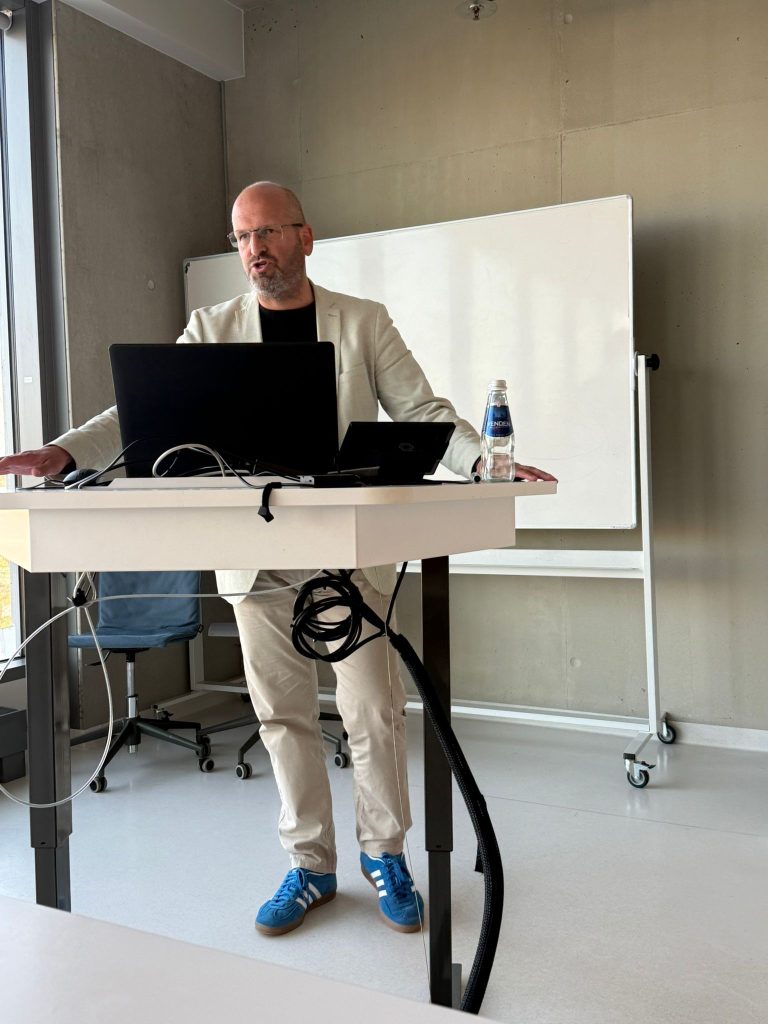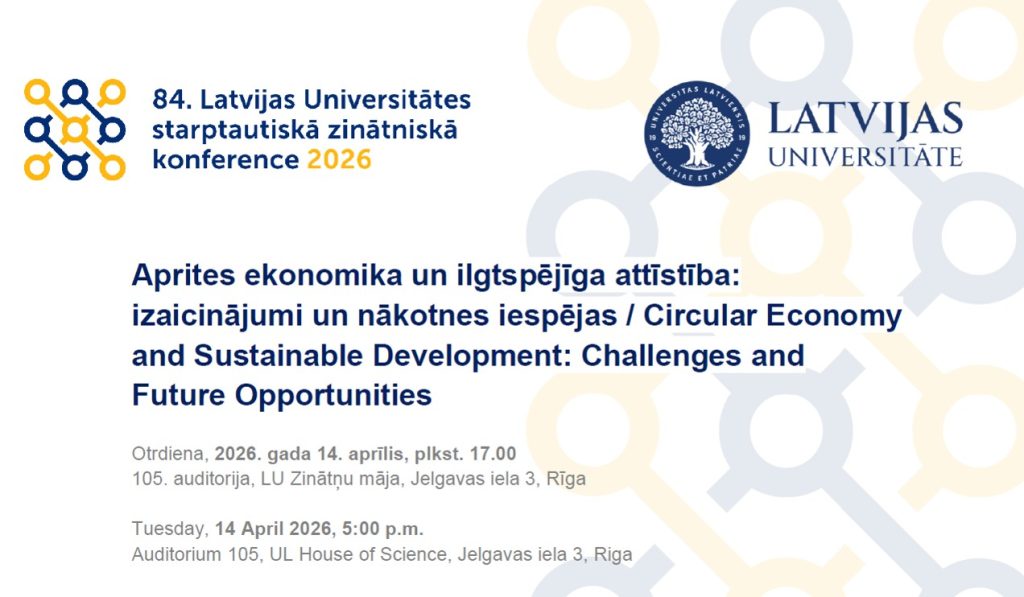
In April 2026, the TransScale project was represented at the 84th International Scientific Conference of the University of Latvia, where project researchers delivered two presentations highlighting key findings on the transition towards a circular and sharing economy in Latvia.
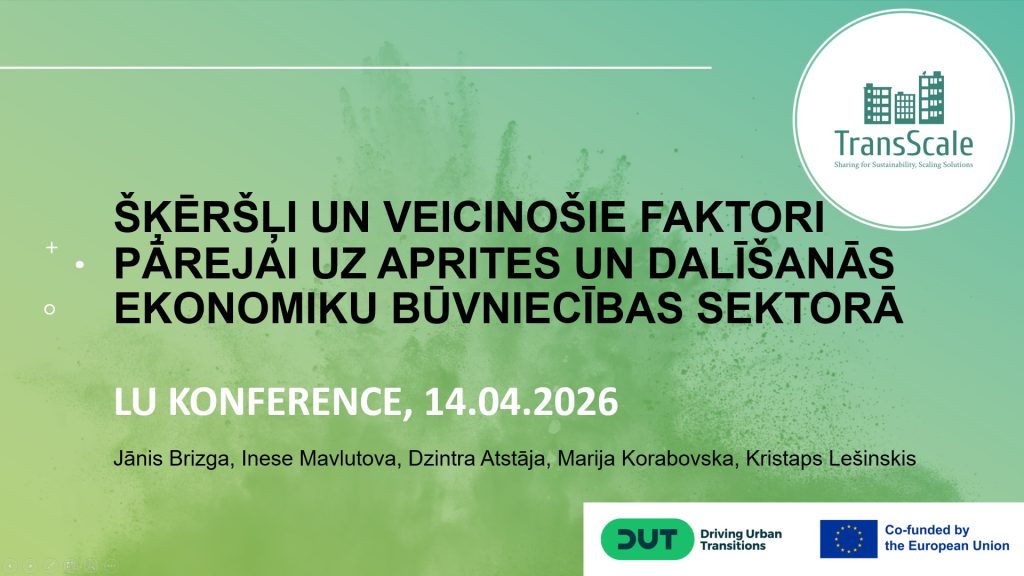
The first presentation, “Barriers and Enabling Factors for the Transition to a Circular and Sharing Economy in the Construction Sector”, focused on the main political, economic, social, and technological factors influencing circular initiatives in the built environment. The presentation highlighted that while many circular initiatives generate tangible local benefits, they often remain at niche level due to systemic barriers such as insufficient policy support, fragmented funding, limited infrastructure, and low public awareness. At the same time, strong community engagement, collaboration, digital tools, and institutional support were identified as essential drivers for scaling up these initiatives.
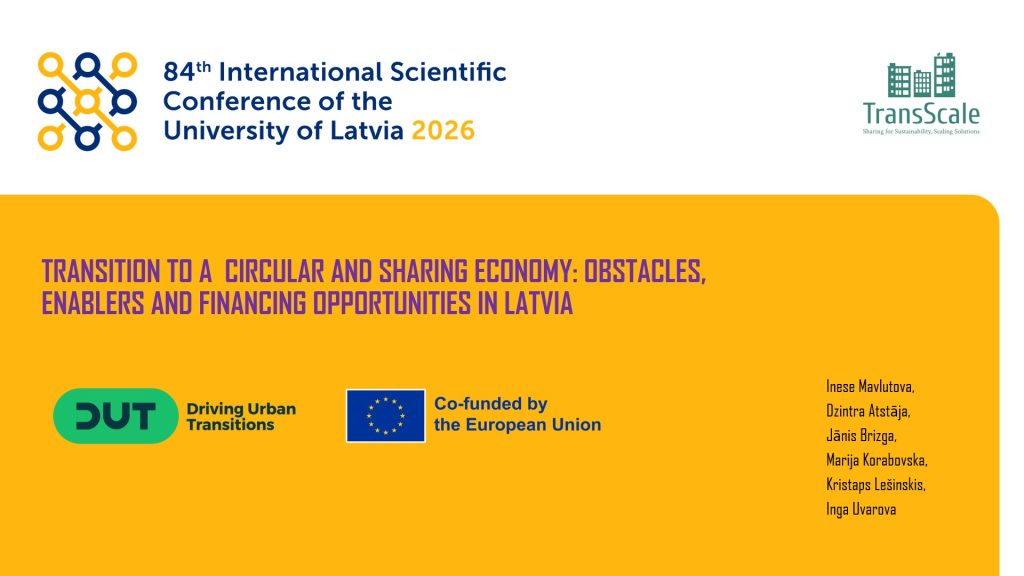
The second presentation, “Transition to a Circular and Sharing Economy: Obstacles, Enablers and Financing Opportunities in Latvia”, explored broader challenges and opportunities for circular economy development in Latvia. Drawing on bibliometric research, literature analysis, and TransScale case studies, the presentation examined internal and external barriers, including resource scarcity, regulatory challenges, market constraints, and resistance to change. It also outlined important enablers such as eco-innovation, public-private partnerships, improved infrastructure, funding opportunities, and awareness-raising measures. The Nomales initiative was presented as an example of practical circular innovation in Latvia.
These presentations demonstrate how TransScale contributes to academic debate and practical policymaking by generating evidence-based insights for sustainable urban transformation.