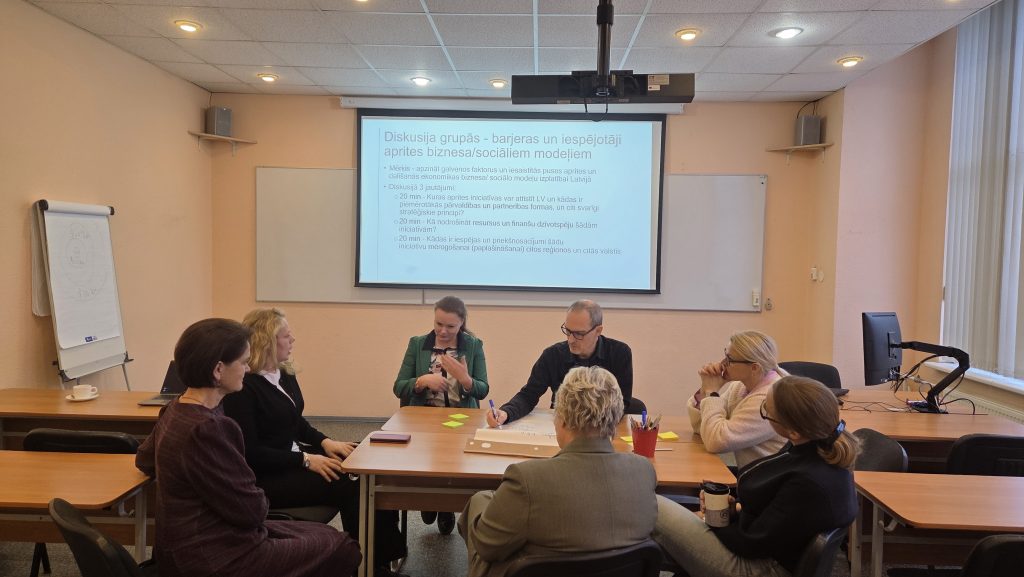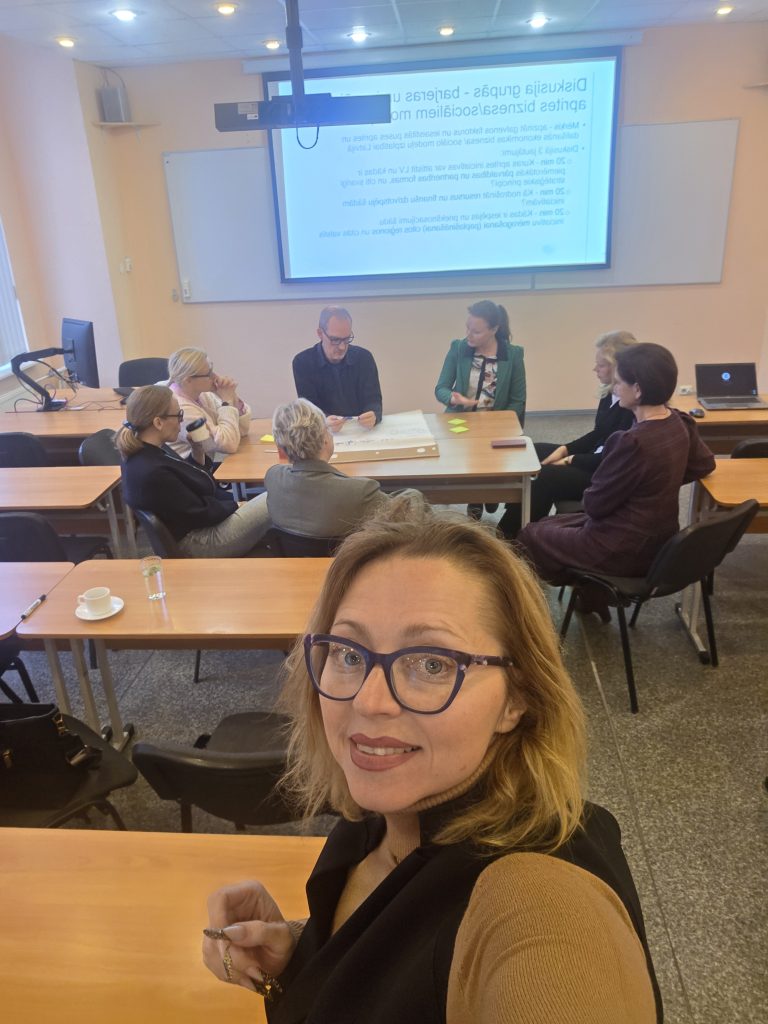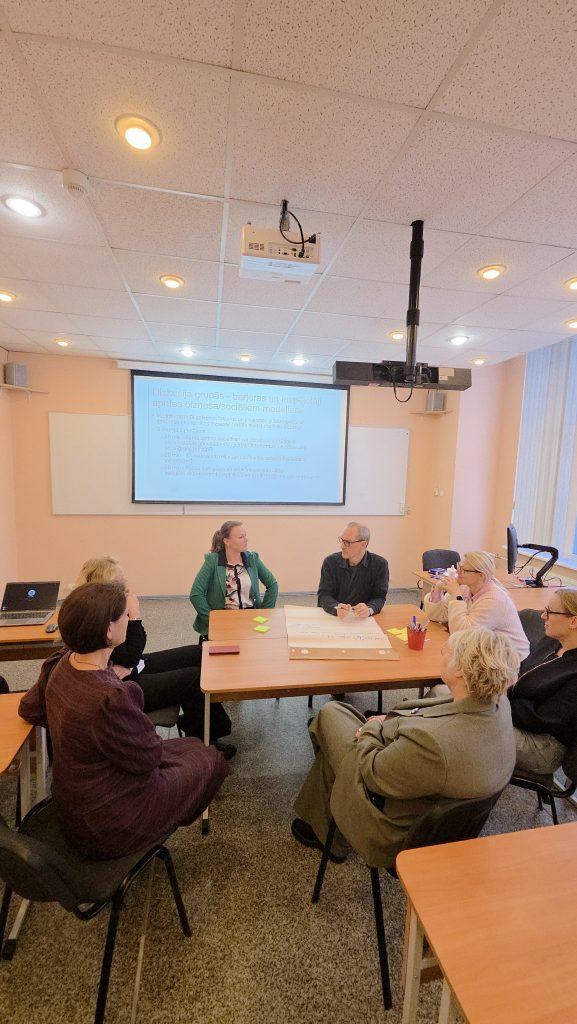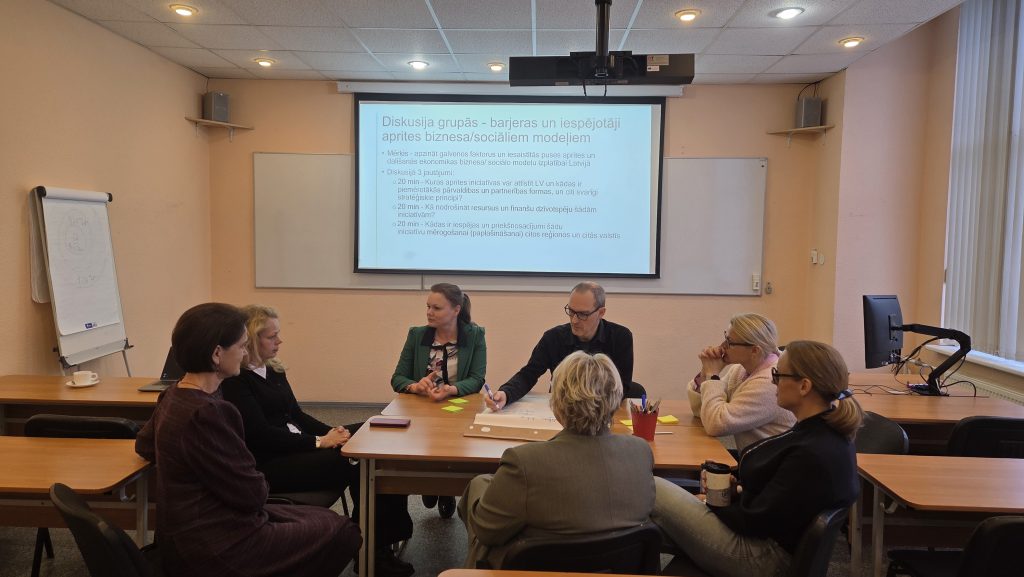
On 26 November, a TransScale project workshop dedicated to circular business models and the factors influencing their development took place at BA School of Business and Finance. The event was organised within the framework of WP3 “Governance and Policy Analysis” and WP4 “Practitioner Perspectives.”
The workshop brought together representatives from academia, businesses, municipalities, and civil society organisations. Discussions focused on the role of governance, policy frameworks, and stakeholder collaboration in advancing circular and sharing economy initiatives in Latvia.
Key insights from the workshop:
- Circular business models must be economically viable and easy to use, as limited time and low engagement remain major barriers for both citizens and businesses.
- Municipal involvement is crucial, yet in Latvia it is often constrained by regulatory limitations and a lack of delegated responsibilities and funding.
- Financial incentives and tax policies were identified as important tools to support companies implementing circular solutions.
- Public perception and prestige associated with circular and sharing practices play a key role in long-term behavioural change.
- Digital tools and improved data flows can significantly enhance the efficiency and scalability of circular and sharing economy initiatives.
Several good practice examples were discussed, including Food Heroes, Andele Mandele, and Nomales, highlighting different approaches to resource circulation, reuse, and community engagement.
About the project
TransScale is an international research project aimed at advancing circular and sharing economy solutions in urban contexts. The project focuses on governance models, practitioner perspectives, and policy and business recommendations that support sustainable urban transformation.