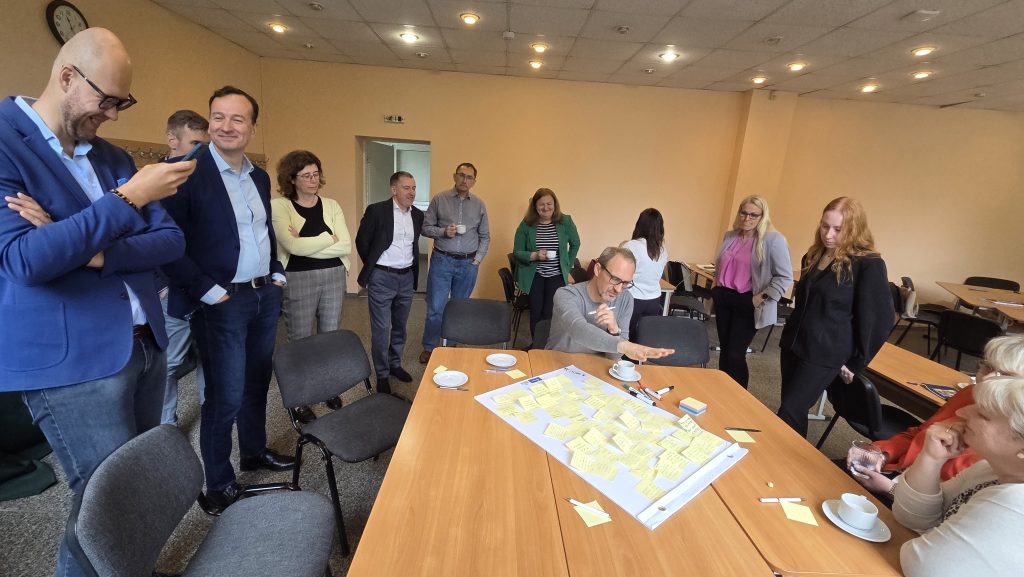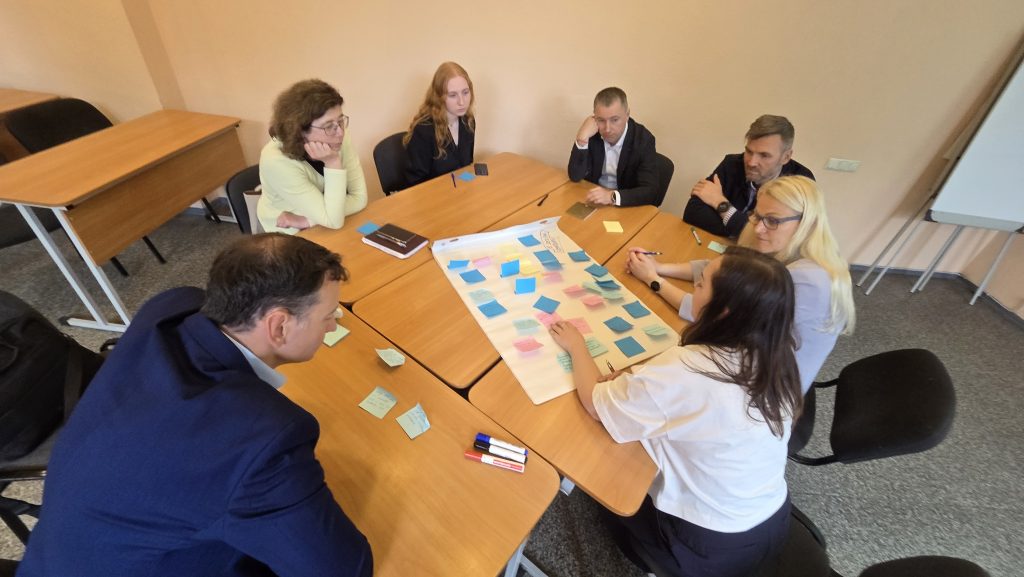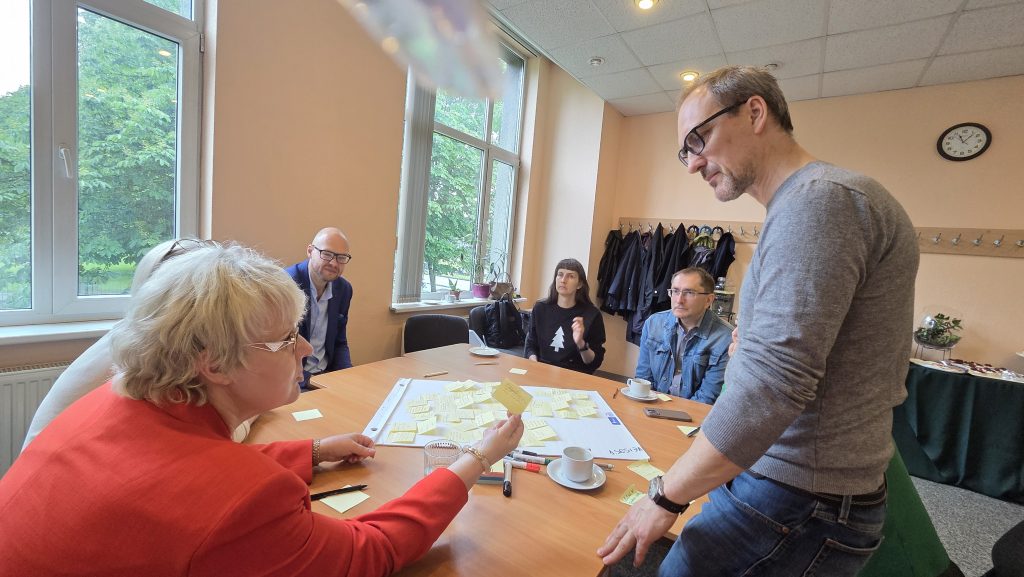
🗓️ On June 11, 2025, a diverse group of experts, researchers, and public sector professionals came together in Riga for a Future Lab session on Circular and Sharing Economy Futures. The event was part of the international “Future Laboratory” initiative, aimed at fostering transformative learning and visioning sustainable development pathways across Europe.
👥 12 participants from institutions including the Ministry of Economics, Rīgas Enerģētikas Aģentūra, universities, and innovation agencies joined forces to imagine bold futures, explore potential risks, and reflect on Latvia’s role in a sustainable transition.
🔍 Purpose and Methodology
The methodology followed the Futures Literacy Lab (FLL) approach, as developed by UNESCO, integrating visioning, counterfactual thinking, and reflective analysis. The lab was designed as a transformative learning process, grounded in theoretical foundations by Mezirow (1997), Singer-Brodowski (2023), and Klein (2022).
It aimed to create a safe space for:
- Critical reflection
- Cross-sector dialogue
- Development of personal and collective foresight capacities
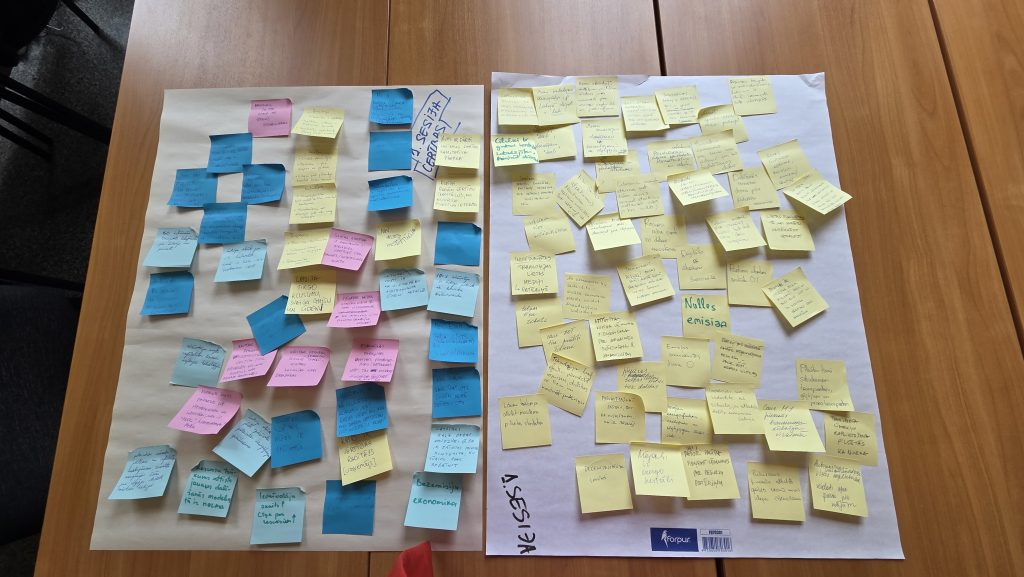
The lab was structured into three sessions:
- Hopeful Futures – where participants co-created ideal visions of a sustainable, circular Latvia.
- Counter-Scenarios – where they explored the risks, blind spots, and societal tensions that might emerge in less favorable trajectories.
- Reflection and Synthesis – allowing participants to integrate insights, confront personal and systemic contradictions, and identify lessons for policy and practice.
🧠 Key Insights from the Workshop
Session 1: Hopeful Futures
Participants envisioned Latvia as:
- A country known globally for its clean air, low-impact lifestyles, and circular production models.
- A society built on trust, local autonomy, and knowledge sharing, with AI and digital tools serving—not replacing—human values.
- A place where community, well-being, and intergenerational solidarity guide innovation.
Session 2: Counter-Scenarios
The counter-scenario exercise encouraged participants to confront:
- Risks of AI-governed resource control, social credit systems, and over-digitalized governance.
- Vulnerabilities such as technological failures, climate stress, and digital inequality.
- Social fragmentation, urban-rural divides, and ethical dilemmas in automating human values.
Session 3: Reflection and Synthesis
This final session helped crystallize key themes:
- The need for adaptive, human-centered governance systems.
- Embedding ethical, emotional, and cultural dimensions into sustainability transitions.
- Strengthening resilience, inclusivity, and long-term thinking in national development.
💬 What Participants Said
Throughout the day, participants shared how the lab:
- Helped them rethink assumptions about progress and innovation.
- Offered a unique opportunity to link their day-to-day professional work to systemic challenges.
- Created space for both emotional engagement and practical foresight—often missing from traditional planning formats.
📌 What’s Next?
The outcomes of the Latvian Future Lab will:
- Be included in a cross-country comparative report alongside labs from other European regions.
- Contribute to a scientific article in the journal Futures, focusing on participatory foresight and transformative learning.
- Feed into policy and educational strategies that aim to enable more inclusive, reflexive, and forward-thinking sustainability governance.